
When you shop for new windows, almost every quote mentions “Low-E glass.” But what is it? And does it matter which kind you get?
In Raleigh, with summers like ours, it matters a lot.
What Low-E Means
Low-E stands for low emissivity. In plain terms, it means the glass is bad at giving off heat.
Low-E glass has a coating made of very thin layers of metal, often silver. The layers are so thin you cannot see them. But they reflect heat while still letting most visible light through.
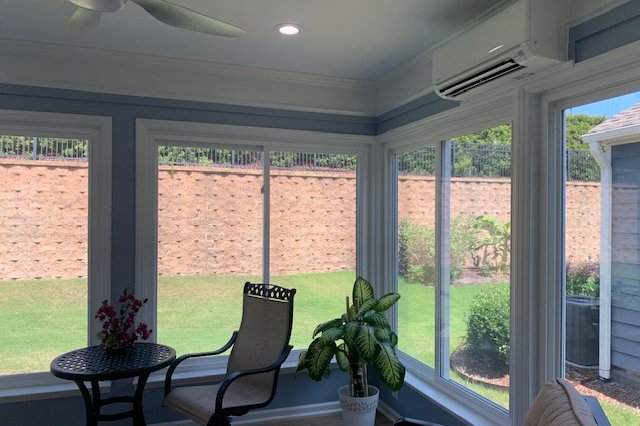
What Low-E Glass Does
- Blocks summer heat. It reflects the sun’s infrared energy before it gets into your home.
- Holds in winter heat. It reflects warmth from your furnace back into the room.
- Blocks UV rays. This helps keep floors, furniture, and rugs from fading.
- Keeps the view clear. Modern coatings look nearly clear, not tinted.
Not All Low-E Is the Same
Some coatings are built to let the sun’s heat in. They work well in cold northern climates. Others are built to keep heat out, which is what most Triangle homes need.
Here is an example. Cardinal Glass, a major glass maker, publishes these numbers for its LoE-366 coating compared with other glass:
| Glass Type | Solar Heat Gain (lower is cooler) | Visible Light |
|---|---|---|
| Single pane, clear | 0.86 | 90% |
| Double pane, clear | 0.78 | 82% |
| Double pane, basic Low-E | 0.72 | 76% |
| Double pane, LoE-366 | 0.27 | 65% |
Source: Cardinal Glass Industries. Glass-only values.
Cardinal also says LoE-366 blocks 95 percent of UV rays. That is a big jump over basic Low-E.
The Ratings You Will See on a Window
Every rated window has an NFRC label. Here is what the main numbers mean:
- U-factor: How well the window holds heat in or out. Lower is better.
- Solar Heat Gain Coefficient (SHGC): How much of the sun’s heat gets through. In NC, lower is better.
- Visible Transmittance (VT): How much daylight comes through. Higher is brighter.
- Air Leakage: How much air sneaks through the window. Lower is better.
- Condensation Resistance: How well the window resists water forming on the inside glass. Higher is better.
What We Recommend for the Triangle
We spend far more energy cooling homes here than heating them. So a low solar heat gain number is the first thing to look for.
Our Ascent windows use LoE-366 with argon gas. For the whole window, they are rated at a 0.19 solar heat gain and a 0.19 U-factor. Upgrading to thin triple-pane glass with krypton gas can bring the U-factor as low as 0.16. Compare your options on our energy-efficient windows page.
Want to know what this adds to your price? See our window replacement cost guide.
Low-E Glass and the Raleigh Summer
Raleigh averages highs around 90 degrees in July, often with heavy humidity. Your AC works hardest in the late afternoon, right when the sun is pouring into west-facing windows.
That is why the solar heat gain number matters so much here. Homeowners in North Raleigh, Cary, and Apex with big rear windows facing west often notice the biggest change after an upgrade. Rooms that used to be too hot to sit in by 4 p.m. stay comfortable.
Fading is the other local issue. Strong sun through old glass can bleach hardwood floors and furniture in just a few years. A good Low-E coating blocks most of the UV that causes it.
Frequently Asked Questions
Is Low-E glass worth it?
For most homes, yes. It blocks heat and UV rays with almost no change to how the window looks. In North Carolina, a low solar heat gain coating makes a real difference in summer comfort.
Does Low-E glass look tinted?
Modern coatings look nearly clear. Some have a very slight tint at certain angles, but far less than old tinted glass.
Can you add Low-E to existing windows?
Not the coating itself, which is applied at the factory. Window films can add some benefit, but they do not match a true Low-E glass unit.
Does Low-E glass block cell phone signals?
Metal coatings can reduce signal strength a little in some homes. Most homeowners never notice a difference.
Questions about glass options? Call (919) 851-0060 or request a free estimate.
About the Author
Harland Johnson is the owner of Harland Windows & Siding. He has run the company for over 40 years and has personally overseen window, siding, and sunroom projects throughout Wake County and the Triangle. Harland Windows & Siding is an A+ rated, BBB accredited business.